
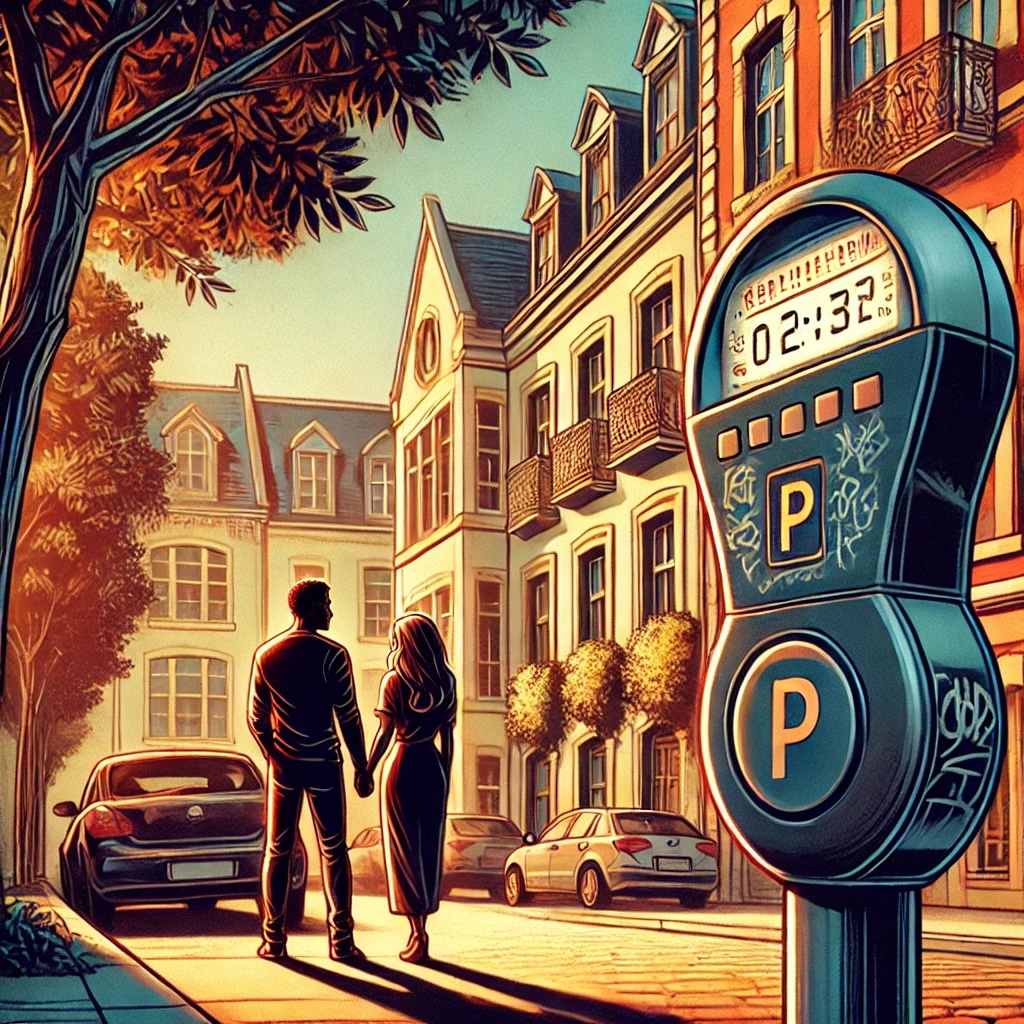
It happened on an ordinary walk through my neighborhood. A quiet street. Familiar houses. A sense of routine that had never felt threatening—until that moment.
Three kids had written the N-word on a parking meter.
I stopped in my tracks. Not just because of the word, but because I recognized one of the kids.
My neighborhood isn’t very diverse. In fact, I’m the only Black person here. I’ve always been aware of that, but I’d never been confronted by it in this way.
This place has a history. Years ago, the local primary school had a principal who told parents, “Our school is not only white on the outside, but also on the inside.” That sentence lingered long after she left. It was one of those things no one talked about—but I felt it, every day.
When my wife found out what happened, she was furious. She called the kid we knew, ready to confront him. But I made a different choice.
I wanted to talk to him myself.
I wasn’t sure what I expected. But I knew I had to stay calm. Not for him—for me.
So I explained. I told him It wasn’t just a word. It was something that cut deep. Something that hurt in a way I could hardly put into words.
And then—he apologized. And he sounded sincere.
We also spoke to his parents. To their credit, they didn’t get defensive. They didn’t try to justify. They listened. They respected my decision when I said I didn’t want to continue the conversation beyond that.
Still, I was shaken. Still, I am.
I’m a big guy. Adults don’t say things like this to my face. But kids? Kids don’t have filters. They reflect what they hear, what they see, what they’re taught. Sometimes directly. Sometimes through the silences, the unspoken rules of a place.
This was the first time something like this had ever happened to me. And it left me with a question I’m still wrestling with:
Where do we go from here?
I don’t have an easy answer.
But I do know this: that word on a parking meter wasn’t just about a slur. It was about the world we’re shaping—for our children, and theirs. And while I can’t erase what happened, I can hope that maybe, one conversation at a time, something can shift.

 The Black Negotiator