
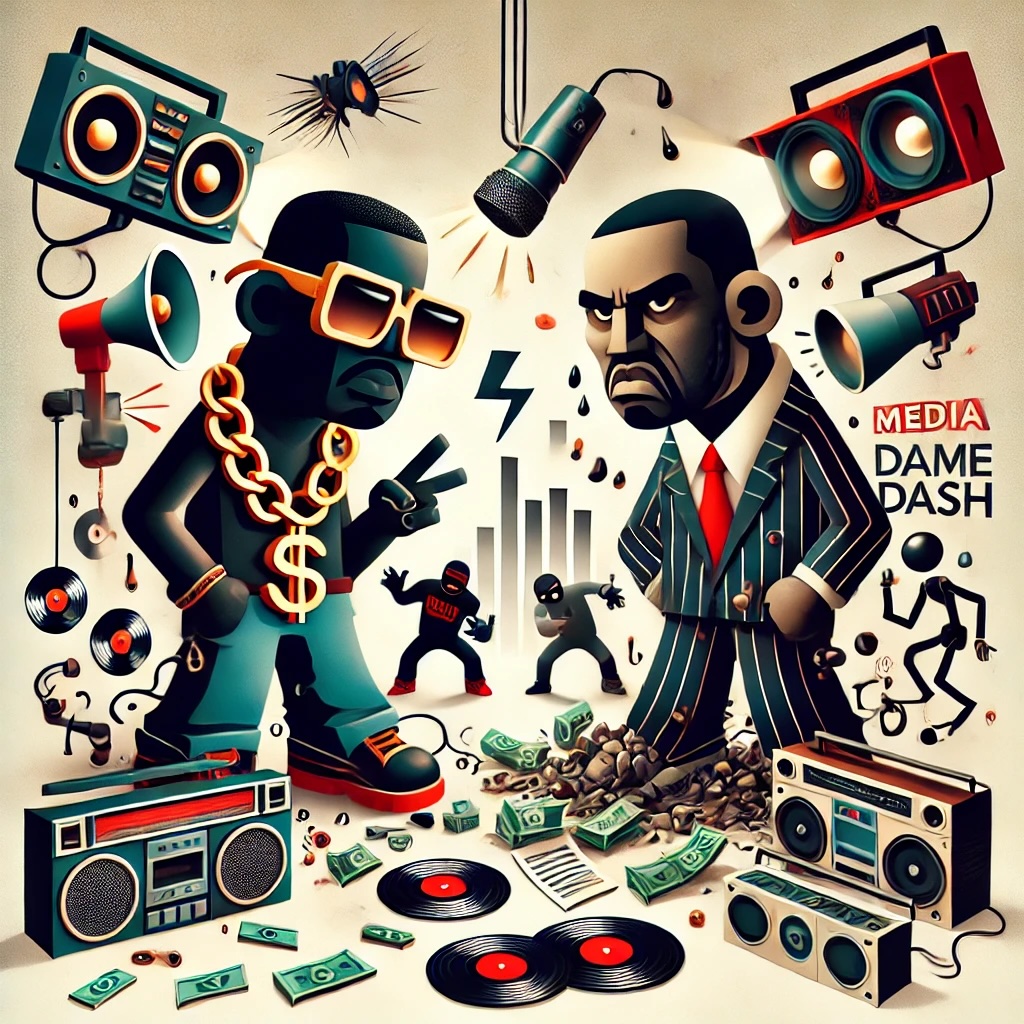
I don’t usually dive into tabloid drama, but I can’t help myself this time. Even if you’re not glued to TMZ, you’ve probably heard that Diddy seems to have a lifetime supply of baby oil stashed somewhere in his basement (IYKYK). Dame Dash? Well, you’ve got to be a little more plugged into the hip-hop scene to know what’s up with him. Long story short, he used to be Jay-Z’s business partner, and now he’s… well, broke, while Jay is on the verge of billionaire status.
But hold up—what’s going on here? We’re not talking about two random guys who got a taste of fame and are now spiraling. These are icons, pillars of hip-hop culture. Without them, the genre wouldn’t be the same. And honestly, especially when it comes to Diddy, things are looking grim. Even if he did just 10% of what he’s accused of, that’s enough to land him in the “yikes” category. The fact that he’s been denied bail, despite offering a casual $50 million, puts him in the same league of infamy as—you guessed it—Harvey Weinstein. Yeah, it’s that serious.
And the parallels between Diddy and Weinstein are hard to ignore. Assuming the accusations are true, both men shaped their industries in massive ways. Without them, we might not have some of our favorite music or movies. And that’s painful. It raises the question: Why does some great art come from such dark places? Why did they do it? How did they get away with it for so long? There are so many questions, but we’re not likely to get satisfying answers.
Then there’s Dame Dash, facing a very different kind of problem. His net worth is reportedly around $100K now, which, okay, isn’t terrible for someone starting out—but for someone who was once worth $50 million? Yikes. He co-founded Rocawear and Roc-A-Fella Records, but now he’s struggling to keep his head above water. And it’s not just the money. It’s the way he’s handling his downfall—talking trash about former partners, selling rights he might not even own, and cheapening the Roc-A-Fella legacy by auctioning off original chains like they’re souvenirs. It’s messy.
I talk about this passionately because, back in the day, these two were it for me. I dreamed of working at Bad Boy Entertainment or Roc-A-Fella Records. I was actively looking for ways in.
But this isn’t just about my personal dreams being crushed—it’s about something bigger. It’s about the impact on Black communities. We need Black billionaires, people with the kind of influence Diddy had. Or do we? I’m starting to question whether we really need more figures like him. Did he ever truly uplift his community, or was it all about his power? Don’t get me wrong—plenty of white men have done this too. And maybe, in some weird way, this is a sign of equality: Some Black people get to be as terrible as some white people.
But I wish it didn’t have to be like this. I wish that, despite our successes, we could remember the struggles we had to go through. That those who make it would turn around and lift others up. Instead of hoarding it for themselves, they’d use their power to mentor, encourage, and support. What I’m seeing, though, is people like Diddy using their power for selfish, destructive reasons. And Dame Dash? He’s dragging others down with him instead of owning his mistakes.
I hope that for those in positions of power—and for all of us, really—we realize our choice: to lift each other up or bring each other down. Yes, in the name of equity, Black people should have the right to do both, just like anyone else. But collectively, we’ll win more if we lift each other up more than anyone else. Am I trying to make my community the best? No doubt. But it does not have to come at a cost for other communities. Heck, I would love every community raise each others because they are all committed to doing better. We would all win in the end. Let’s remember that.

 The Black Negotiator