
A note before I start: this is the story of my dad. Like many people from his generation, he didn’t talk much about his life. So parts of what follows are inferred. I’m sharing it because it explains part of my story and how I think. Although he was not really around he shaped part of my worldview. Hoping this post, through a quick read can also impact people.
My dad grew up in Martinique in a humble family. In the 1950s, the odds of a young Black man from the island making something out of his life on his own terms were… not great. The world had already written a pretty clear script for him. He didn’t follow it. He enlisted in the French army.
That decision wasn’t some romantic leap of ambition. It was a bet — made from a place of constraint — that the unknown was better than the ceiling he could already see. And where that bet took him was the Algeria War. One of the most brutal, most morally complicated conflicts of the 20th century. A war most veterans never spoke about. Not out of shame necessarily, but because some things are just too heavy for words. He never spoke about it either.
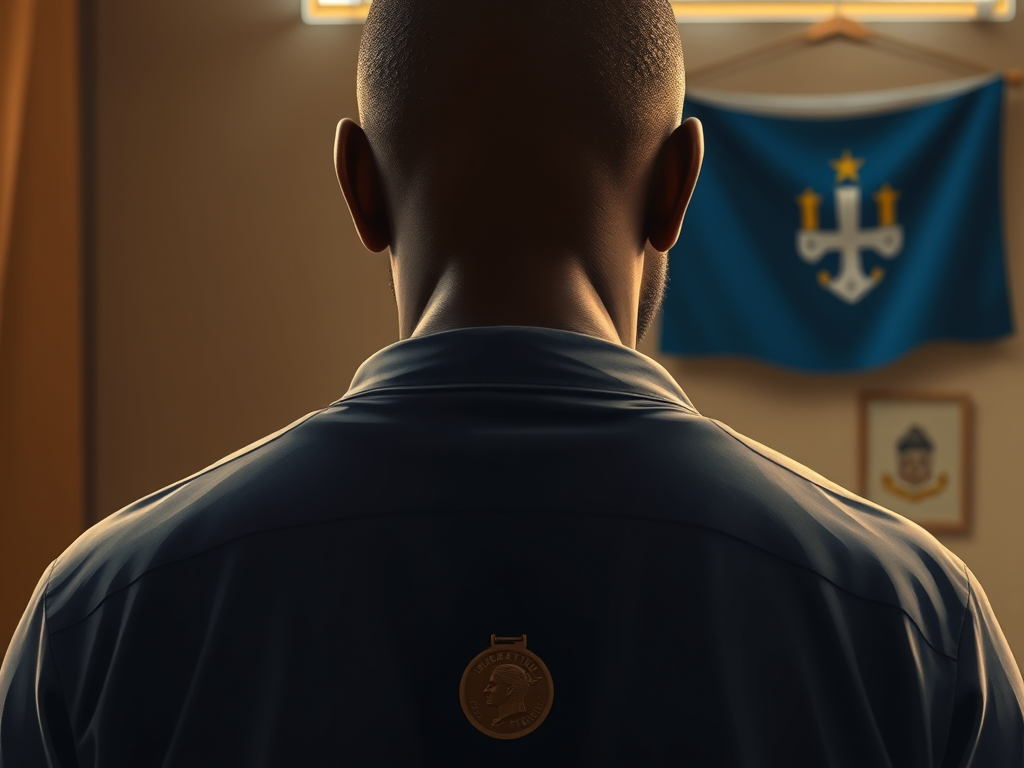
What I know is this: he came back with the Croix de la Valeur Militaire. A military decoration for acts of courage. He kept the medal — but it was never on display. Somewhere in a drawer. And honestly, I think that says everything. He was proud enough to keep it. But uncomfortable enough to not display it.
Here’s the thing about people who’ve been through the fire: they don’t need to announce it. You could just feel it with my dad. He had this quiet confidence that wasn’t performed. It was earned. He wasn’t the loudest person in the room. He didn’t need to be. He walked around like someone who had already faced the hardest version of himself and decided who he wanted to be on the other side.
He built a career in General Aviation and became a leader in his field. He was involved in his community, to the point they rename his street after him. I used to argue with him about politics — just for fun, honestly — and he’d engage, smile, and move on with his life. Nothing would shake him. Not because nothing mattered to him. Because he had already decided what mattered most. That kind of lightness? It doesn’t come from having had it easy. It comes from having been through something, and choosing not to let it own you.
I want to be honest about something though. The same path that opened doors for him also cost something. The Algeria War was not a glorious chapter of history. Enlisting out of necessity is not the same as choosing freely. And I imagine he had to do things during that war that he was not proud of. The medal in the drawer, not on the wall — that tension is real. Both things can be true at the same time: that an experience was hard and complicated, and that it shaped you into someone remarkable. That’s not a contradiction. That’s just life, fully lived.
I think about the young people today standing at the edge of their own island. Maybe it’s not a physical island. Maybe it’s a neighborhood, a family situation, a limiting belief that’s been repeated so many times it starts to feel like fact. The lesson here isn’t that you need to suffer to succeed. The lesson is that the move, the first bold, irreversible move, is almost always available to you. It rarely looks perfect. It rarely feels safe. But my dad, standing in Martinique in the 1950s with almost nothing, could not have imagined the life waiting for him on the other side of that decision. He just made the move.
Personally, writing this has been strange. My dad passed away, and there’s a lot I’ll never know about what he went through. The medal, the silence, the confidence he carried — I’ve spent a lot of time trying to connect those dots. What I do know is that when I think about quiet boldness — real quiet boldness, not the performative kind — I think of him first. He is probably the biggest influence on how I carry myself. And in many ways, understanding his story has helped me understand my own.

 The Black Negotiator